A recent survey of 200 U.S.-based MSPs tells a revealing story of the inflection point the MSP industry has reached. The “Managed Security Snapshot: 2025 Growth, Gaps, and Game Plans” report, commissioned by Cynet, underscores both the opportunities and challenges MSPs face as they expand their cybersecurity offerings to meet growing client demand amid escalating cyber threats.
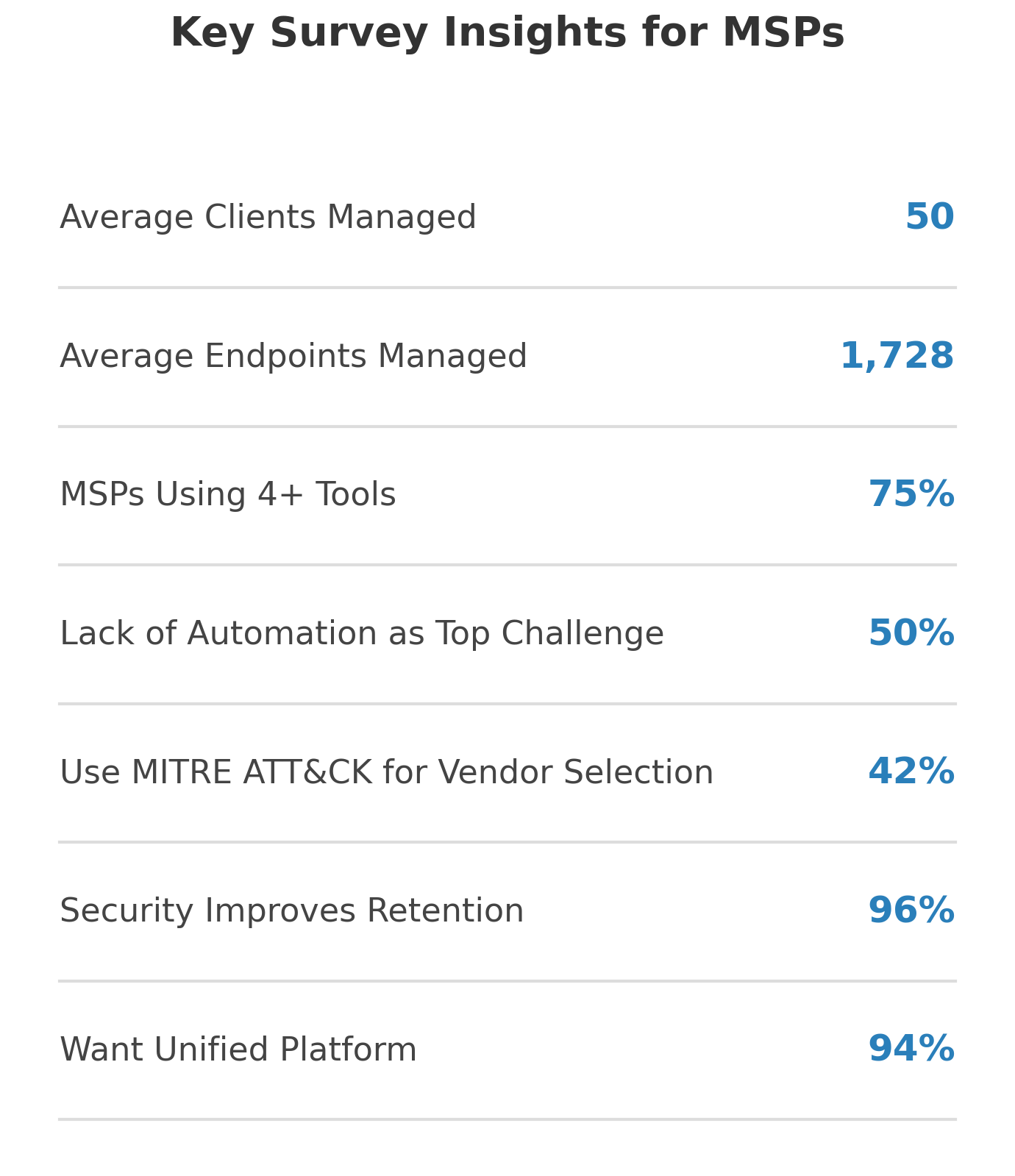
The study found that MSPs now manage an average of 50 clients and oversee 1,728 endpoints—exposure levels that continue to climb with business growth. While scale is a positive, it can come at a cost. Most MSPs use at least four separate security tools, with larger providers averaging six. This tool sprawl leads to integration gaps, visibility blind spots, and increased operational burdens. The impact is that MSPs with more extensive tool stacks often report thinner margins, despite higher revenue.
That said, scaling isn’t always easy, and automation – or lack thereof – emerged as the most significant barrier to scaling security services, cited by 50% of respondents. Nearly the same amount also identified poor tool integration as a core challenge. Automation drives efficiency and, without it, growth becomes more difficult, as teams juggling complex, disconnected environments face increased operational strain.
Staffing remains another pressure point. While MSPs employ an average of five cybersecurity specialists, security staff represent just 8-20% of total employees. Salaries for these roles average $111,780 annually, reflecting the investment needed to retain skilled talent in a competitive labor market.
Despite these challenges, cybersecurity has become a cornerstone of client loyalty. An overwhelming 96% of MSPs reported that their security services had a positive impact on client retention.
“Security is sticky – it’s what keeps clients engaged for the long haul,” the report noted.
Given the alarming ramifications of security incidents, it’s easy to see why cybersecurity is a primary driver of long-term relationships and competitive differentiation for MSPs.
In terms of vendor selection, MSPs are shifting priorities. Reliability and support now outweigh brand and pricing, with 42% of respondents citing MITRE ATT&CK evaluations as their top decision-making resource. This reflects a growing emphasis on data-driven performance validation over marketing claims.
Perhaps the most striking finding, though, is that 94% of MSPs expressed interest in a unified cybersecurity platform. For smaller providers, these holistic platforms offer a way to consolidate essential tools, reduce costs, and improve visibility. For larger MSPs, they promise relief from the operational headaches caused by years of disparate tool accumulation.
Based on the survey, it seems the future of MSP cybersecurity lies in consolidation, automation, and strategic vendor partnerships. Rather than compiling a long list of cybersecurity tools, MSPs need to look at delivering effective protection, insight, and performance – and do it at scale to drive growth. To accomplish that, they should:
- Prioritize Automation – Invest in platforms that integrate workflows and automate repetitive tasks to reduce overhead and improve response times.
- Consolidate Tools – Shift from point solutions to unified platforms that improve visibility, reduce integration gaps, and simplify vendor management.
- Leverage Third-Party Evaluations – Use MITRE ATT&CK and peer-reviewed benchmarks to select solutions with proven real-world performance.
- Align Security with Retention – Position cybersecurity as a cornerstone of client relationships, reinforcing its role in retention and long-term revenue.
- Plan Proactively – Move from reactive tool adoption to regular, strategic stack reviews to stay ahead of evolving threats and operational demands.
As MSPs rethink their growth strategies to drive success into the future, simplifying toolsets, automating workflows, and aligning with vendors who provide measurable outcomes will be key factors for sustaining margins and maintaining trust in an increasingly competitive market. While this comes with its challenges, they don’t have an option. Security is never going to not be at the top of the list of IT needs… we’re way past that point.